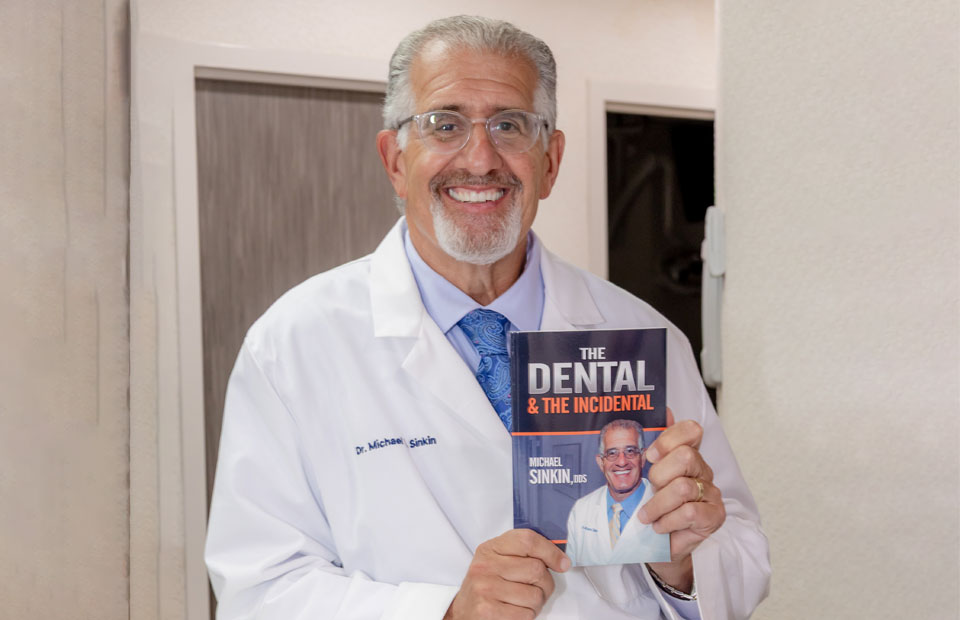
Dr. Michael Sinkin, D.D.S.
Dr. Sinkin's Blog: The Dental And The Incidental

HPV and Cancer

June 18th, 2013 by | No Comments »

HPV, HPV and Cancer, Michael Sinkin DDSIn my humble opinion, Michael Douglas’s portrayal of Liberace in HBO’s “Behind the Candelabra” was quite the performance well deserving of the publicity that Time Warner invested in the production. Buses plastered with Michael Douglas/Liberace’s visage ran up and down the avenues of New York for weeks prior to the film’s premiere. But it might very well be that Mr. Douglas’s greater role was that of the unintended unofficial and perhaps uncouth (if you take the New York Post at face value) spokesman for the Human Papilloma Virus (HPV) and it’s causal relationship with oropharyngeal cancer. In a much reported interview that was published in The Guardian, he claimed that his stage lV throat cancer was caused by performing oral sex. “Without wanting to get too specific, this particular cancer is caused by HPV, which actually comes about from cunnilingus.” The fact that he was a heavy smoker and regular alcohol user was not factored into his assessment (not sexy enough?).

Here are the facts: Smoking is the single greatest cause of oral and throat cancers. Coupled with excessive alcohol use, the risk of developing these cancers is even greater, much greater. Human Papilloma Virus has been linked to 1 in 4 cases of oral and oropharyngeal cancer. Logic dictates that if one is a smoker, a drinker and has many sexual contacts with different partners, the risk of developing oral cancer rises exponentially.

“Cases of oral cancer resulting from exposure to the HPV-16 strain of human papilloma virus are hitting epidemic proportions in the U.S., most of the victims are men in their late 30’s and early 40’s who have developed tumors on the back of their tongues and on their tonsils from engaging in oral sex with multiple female partners.” (NY Daily News, April 19, 2011) It is because of this trend that the Center of Disease Control (the CDC) revised its guidelines concerning the administration of the HPV vaccine.

Originally the HPV vaccine was only intended for young girls around the age of 12. Currently the CDC recommends the HPV vaccine for boys and girls 11 or 12 years old. The relatively young age is to insure that they are well protected before being exposed to the virus and because the immune system is much more responsive at this age. The vaccine is given in 3 doses over a 6-month period. The CDC’s position is that the quadrivalent HPV vaccine prevents a variety of HPV infections that cause many of the 7000 new cases of related cancers each year including oral cancer.

The CDC has reported that currently the HPV vaccine is being under utilized by the female population. There is a concern among parents regarding the vaccine’s safety (recall the ongoing controversy regarding vaccines containing thimerisol and autism). The CDC has indicated that the safety of HPV vaccine is one of the most carefully studied, but resistance remains. This has contributed to the Center’s expanded guidelines to include boys in the vaccination protocol since their protection would also help reduce spread of the virus.

I have been much aware of the seriousness of oral and oropharyngeal cancer. Detected early, these cancers can be cured. The problem lies with early detection. All of my patients receive a thorough soft tissue exam with close inspection of the oral mucosa- the lining of the cheeks, tongue, floor of the mouth, hard and soft palate and tonsils. This is exam is accompanied by palpation (manual exam) of the neck and throat with special attention to the lymph nodes. With all of this, oral cancer in its earliest stages is still very hard to detect. That is why I introduced Velscope into my examination routine. Velscope is a diagnostic tool that by way of a specific wavelength of light can help detect oral cancer in an earlier stage because we are looking for changes below the tissue surface. Suspicious areas are seen on a follow-up visit and if necessary a biopsy will be scheduled.

So while Michael Douglas may have been called a cad by some for his insensitivity towards his wife in discussing intimate interludes, I think he has done a great service to those who may not have known of the risks posed by HPV.

Find out more about Velscope here

Link here to the CDC information page about HPV Virus


Dr. Michael Sinkin has been practicing dentistry for over two decades. He truly cares about the experience his patients have and takes great pride in making them feel relaxed and comfortable during every visit. Come in for an appointment and experience a different kind of dental practice. To find out more about Dr. Sinkin, please link here


If you enjoyed this post, please make a comments or log-in to my Facebook page to share it with your friends. Thank you!

A Very Special Holiday Weekend

June 5th, 2013 by | 3 Comments »

For the past eight Memorial Day weekends, I have celebrated the start of summer with my friends on Fire Island. But not this year. Rather than strolling the sandy seashores of our beautiful beach, I found myself wandering the hallowed halls of higher learning at Cornell University where my son Jonathan has just been conferred his Masters of Engineering Degree (No sunscreen required).

Cornell Graduation, Sinkin,

It’s hard to believe that it was just a short year ago that the Sinkin family was reveling in Jon’s success when he earned a double degree in Industrial Engineering and Mathematics at Buffalo University. What makes Jonathan’s story of achievement so compelling is that at the age of 5 we learned that he had a significant learning disability and that his future prospects seemed very uncertain (at least through the eyes of his worried parents – namely Ann and yours truly.)

Thankfully it was Ann’s perseverance, love, persistent bellyache, and of course great professional advice (Lydia Soifer, The Windward School and Lisa Kerenyi) that prodded, guided and even dragged our baby down the right path. It was a path that cultivated Jon’s self-esteem by giving him the opportunity to succeed, instilling within him a deep sense of fulfillment and ultimately bringing him to a state of self-actualization. I was so proud of Jonathan when he graduated from college that I was inspired and encouraged by him to write a blog entitled ”My Son Has A Learning Disability” which detailed our journey of discovery as the parents of a child who learns differently. I posted that story late last spring and received great feedback…from Jon and from parents of young school-aged children. Ironically, Jon asked me to remove it from my website when he was job hunting. It seems that when he Googled himself, the blog appeared very prominently in the search results. And, while he is very comfortable with whom he is, Jon is not naïve. I took the story down sometime in January.

In 6 weeks time, Jonathan will be moving to Boston where he will be working for Verizon as a project manager.

In this day and age of political correctness, learning disabilities are commonly, and perhaps more appropriately referred to, as learning differences. We all learn differently. Some of us are more visual. Others may be more auditory. Those of us in the “normal spectrum” are able to process information from a variety of sources and readily incorporate it into our base of knowledge. Children with true learning differences cannot effectively process the inflow of information. Unless they are given the tools to identify, decode and interpret all of those bytes of language, their education can be impaired, regardless of their intellect. A computer can be loaded with sophisticated microprocessors and powerful hard drives, but if the operating system has a glitch, all its bells and whistles will not allow the computer to function as it should. Such is the case with a learning disabled child. Early intervention is critical. The sooner a problem is identified, the earlier remediation can begin.

Jon’s greatest fortune was that he has Ann as his mother. Her intuition, what she referred to as her “bellyache” kept her digging for answers. Her persistence is what put Jonathan on the right path. She was able to assemble a team that put the ball in his hands and he ran with it. In the early years, Jonathan was given the tools to learn how to learn. As he grew so did his confidence and his accomplishments. And now, he’s a Cornell graduate with a Masters in Engineering and a job to boot.

It doesn’t et better than this. I am so proud of my son and so thankful to my wife. What a memorable and momentous Memorial Day weekend!

Sinkin, Cornell Graduation

- Michael


If you enjoyed this post, please make a comment or log-in to my Facebook page to share it with your friends. Thank you!

Popcorn – Danger In The Movie Theater

May 14th, 2013 by | No Comments »

Cracked Tooth on Popcorn KernelOh to appreciate the simple pleasures in life: that first sip of coffee in the morning, a walk in the park on a beautiful spring day, seeing a much anticipated movie in a theatre with a large bag of freshly popped popcorn on your lap. But you better be careful…you don’t want to burn your lip or spill coffee down your brand new shirt, you don’t want to step through a patch of poison ivy as you behold nature’s beauty, and you certainly don’t want to crack your tooth on an un-popped kernel of corn during the coming attractions.

While I can’t cite any research statistics, I can tell you that in the last two months I have seen six emergency patients whose teeth have cracked while munching popcorn and another two patients with local gum abscesses from pieces of brown popcorn husk wedged under the gum.

A typical popcorn movie muncher will begin the epicurean experience by daintily using just their fingertips to lift those fluffy puffs to the lips. As the corn disappears inside the bag the hand delves deeper into the container and scoops out a more generous portion that finds its way into one’s waiting mouth. The savory stimulation spurs further almost autonomic shoveling of the snack into the recesses of the oral cavity where the mindless mastication of the soft made-for-the movies maize continues, until…CRACK!  A tooth has just struck an unanticipated obstacle, the un-popped kernel, and the damage is done.

Perhaps a piece of an existing filling has broken off leaving a jagged edge. Maybe an entire cusp broke off leaving the tooth exposed and sensitive. Or even worse, maybe the tooth split in half (not a promising scenario). Regardless of the specifics of the dental injury, an immediate visit to the dentist will be required.

A tooth will most commonly break when one unexpectedly bites into something hard; an olive pit, a piece of grizzle, sand in a spinach salad and of course the rogue hard kernel of popcorn. Foods that are known to have “hazardous debris” must be approached with care. Popcorn is delicious and nutritious (only 31 calories in one cup of air popped corn without butter). Just be aware of what usually lies at the bottom of the bag and try to make it last at least until the end of the trailers.

In the event that this situation ever happens to you (and I hope it doesn’t!) make sure you know what to do if your tooth cracks or you lose a crown.

Dr. Michael Sinkin is an NYC dentist that has been in practice for over two decades. He truly cares about the experience his patients have and takes great pride in making them feel relaxed and comfortable during every visit. Come in for an appointment and experience a different kind of dental practice. Find out more about the doctor here: Dr. Sinkin.

If you enjoyed this post, please make a comments or log-in to my Facebook page to share it with your friends. Thank you!

Dental Fear (from a Dentist’s Perspective)

April 30th, 2013 by | 2 Comments »

Overcoming Fear and Anxiety at the Dentist's OfficeI’ve been a New York City dentist for 30 years, and believe me, we have a lot of everything here, including a lot of people who are scared of going to the dentist!

Recently I decided to do some Google searches for terms such as: gentle dentist, gentle dental, and we cater to cowards. My screen was inundated with innumerable listings of dental practices proclaiming “painless dentistry” as their mantra. Conducting an even deeper search uncovered a plethora of chat rooms and online forums in which scores of patients recounted their tales of dental woes and commiserate with each other about  how going to the dentist is scary and dreadful. It’s no wonder that so many dentists use the “concept of compassionate care “ in their marketing; there are thousands, if not tens of thousands, of would-be/could-be dental patients who aren’t patients at all because they are just too afraid to make an appointment (let alone, keep it!).

Going to the dentist is not on most people’s list of favorite things to do, and for the anxious, fearful, and certainly the phobic patient, the mere idea of going to a new dentist is like pulling teeth (sorry, I couldn’t resist!). Notwithstanding dentistry itself with all the accompanying sounds, tastes, smells and sensations; a visit to the dentist, especially one for the first time, can engender unsettling feelings of anticipation and vulnerability.

What is it about going to the dentist that evokes such unease?

I have some thoughts about this that I’d like to share with you; thoughts based on insights gained from more than 30 years of private practice and a lifetime of observation.

We each have a comfort zone and an individual sense of personal space that greatly influences our daily interactions with people. Say, for purposes of illustration, you go to a party and meet someone for the first time. Discounting an encounter with a “close talker” you may begin your conversation at an arm’s length distance. As the evening progresses and if you develop rapport, your proximity to each other closes to within a foot or two. If you really hit it off with your new acquaintance perhaps by night’s end your mutual perception of personal space and its boundaries has eased to where you are actually sharing some space; maybe to the point of a hand brush or tap on the back. So, over the course of several hours you have adjusted your comfort zone with someone and have tacitly “invited” your new friend closer into your personal space.

Now fast forward to the next day. You have an appointment with a new dentist. Within minutes of meeting him, the dentist is not only in your personal space, he’s literally in your face, in your mouth, and above your head “coming at you” with sharp objects that shimmer in the light. So much for comfort zones!

A truly caring and effective dentist must recognize and understand the behavioral and emotional dynamics at play between himself and his patient if mutual trust and comfort is to be achieved. This is especially true when anxiety and fear are part of the equation.

What I Have Learned About Dental Fear

A quick and easy rapport is essential to breaking the ice. Light banter and a sincere smile go along way to putting a new patient, especially an anxious one, at ease. I never approach a patient clinically without first having made direct eye contact and sharing at least a few moments of conversation. By the time I don my gloves, the patient has relaxed enough to be ready for an examination. In essence, I await permission to enter his or her personal space. This initial exchange is very important for the anxious or fearful patient because it gives a sense of control that the truly vulnerable don’t possess.

Another aspect of Dental Fear is the feeling of having something done to you. For the record, I never do anything to my patients, but I always do my best for them. Semantics? Absolutely not. It’s my philosphy and approach to people that epitomizes compassionate care and minimizes patient stress. If someone truly feels cared for there’s less angst about the treatment rendered.

One final comment: I don’t treat teeth; I treat people with teeth. Knowing that my staff and I and I are here for them, gives my patients both an implicit and explicit sense of reassurance.

Saying “I’m Sorry”

“I’m Sorry” is probably of the most oft spoken words I use with my patients during any given day. While I pride myself in delivering virtually painless injections (good technique and lots of topical anesthetic), I almost reflexively say,  “I’m sorry” while administering “a shot.” I’m not so much offering up an apology, as I am acknowledging the unpleasantry of getting an injection in the mouth. One of my wonderful assistants Carmen has joined me in my mea culpa, so our “sorrys” are delivered in harmony. It’s just our way of letting the patient know that we are here with, and for them. “I’m not giving a shot to you; I am giving anesthetic for your comfort.)

Along with the “I’m Sorry” comes the all-important handhold or reassuring hand squeeze. Kim and Carmen are great at “manual reassurance” and our patients almost universally appreciate the gentle reminder that we care. Vulnerability and fear dissipates in the company of comforting hands and words of kindness.

Case Study: A Patient with Dental Phobia

A new patient, Rachel C. recently came to my office. She had previously been the recipient of quite a bit of dental care and needed Root Canal therapy on a front tooth. Going through our ritual of getting her numb, I sensed  uneasiness after I completed the injection. I asked if she was alright. Rachel told us the “shot” was great but she had never had her hand held in a dental office and was a bit surprised. I then inquired if she was uncomfortable by it, to which she quickly replied, “Oh no…. I kind of liked it. I just didn’t expect it! You can hold my hand any time.” We all laughed and a tense situation (injection and forthcoming Root Canal) was lightened with levity. In this day and age of high tech dentistry and medicine which can be quite intimidating, the importance of high touch – reaching out to connect with your patient on a personal level – is that much more important.

Pain Control in Dentistry

Pain control is paramount to managing dental anxiety and fear. If you’ve ever had a bad experience in the dental chair involving pain, the memory can last a lifetime. Erasing the experience from the conscious or unconscious mind can be a Herculean, if not impossible, task. But making sure that my patient does not feel pain during treatment is my first priority. I have had many dental procedures performed in my own mouth including fillings, crowns and Root Canals. I have sensitive teeth I know the feeling when a not quite numb tooth is drilled on and I know that dreadful feeling of anticipation; the  waiting to feel that  pain again; even if it never comes. Once you feel the pain, you never stop waiting to feel it again.

Ensuring that my patients are physically comfortable provides an emotional and psychological feeling of well-being. And it’s not enough to just give a sufficient dose of anesthetic, I make sure to wait long enough for it to take effect. Some people just take longer for their mouths to get numb and I will often ask those patients to arrive for their appointment a bit early, just to give the anesthetic more time to take effect.

More Ways to Lessen Dental Fear

There are additional ways and techniques available to make patient care more comfortable. Nitrous Oxide is a wonderful analgesic that not only can relax the apprehensive, it also raises one’s pain threshold making anesthetic that much more effective. Certain prescription drugs can be prescribed for the night before to ensure a good night sleep and that can lessen the trepidations associated with dental care. During treatment music in the room, iPods, or television with headphones all offer nice distractions from the sounds especially, in conjunction with nitrous or other relaxants. But after all is said and done, having a compassionate caring dental team that is dedicated to patient well-being and comfort is the most important piece of the puzzle in reducing dental fear.

Over the years, I have had the wonderful opportunity to help many people cope with their apprehension and fears so that they could receive the long overdue dental care so desperately needed, to attain a state of oral health that never seemed possible, and to regain the smile they lost long ago. The sense of personal fulfillment and professional accomplishment knows no equal as the experience of helping the dental phobic overcome their fears and achieve success. Ironically, it is most often the anxious patient that questions whether he or she is my worst patient, when in reality the opposite is true.

If you are avoiding dentistry because of dental fear or anxiety, please call my office to either schedule a consultation visit or to speak with me on the phone. See if it feels right, see if the chemistry is right before working yourself up to a state of panic.

Talking never hurt anyone.

Dr. Michael Sinkin is a NYC dentist that has been in practice for over two decades. He truly cares about the experience his patients have and takes great pride in making them feel relaxed and comfortable during every visit. Come in for an appointment and experience a different kind of dental practice. To find out more about Dr. Sinkin, please click here

If you enjoyed this post, please make a comment or log-in to my Facebook page to share it with your friends. Thank you!

Painless Root Canal Treatment: An Oxymoron?

April 1st, 2013 by | No Comments »

Painless Root CanalSo I was informed by one of my professional journals that this past week was “Root Canal Awareness Week,” which explains why I had noticed scores of people running fearfully down the streets of Manhattan while screaming in pain. (I’m only joking; not the part about root canal awareness but about the people running around the city in abject terror.) But the fact is that root canal treatment, also known as endodontic therapy, is THE MOST FEARED dental procedure.

Mention root canal to a person who has never had the experience, and images from the movie Marathon Man come to mind; you know the scene when Lawrence Olivier drills into Dustin Hoffman’s tooth sans Novocain, interrogating him, “Is it safe?” (Makes water boarding seem almost benign.) So ingrained in our culture is the torment of root canal that the idiom, “I’d rather have a root canal” has become synonymous with an absolute worst case scenario: that a situation is so bad that one would rather “be subjected” to a root canal is based on the almost universal misconception that root canal is horribly horrifying.

Much of this perception stems from early treatment methods used many decades ago to perform the procedure. Due to these now antiquated techniques and less effective anesthetics available at the time, the misery associated with root canal therapy has been indelibly imprinted upon our collective memories.

The Truth About Root Canal

While a toothache due to an inflamed nerve or abscess can be excruciating, root canal therapy is most often completely painless. Modern dentistry, with all of its advances, has essentially made painful root canal treatment, a thing of the past. In my experience, the patients most fearful of root canal are those who never had it before and believe me, when I tell you the apprehension felt is as intense as it is visceral. Calm reassurance and a gentle caring approach work wonders to lessen the anxiety; but it isn’t until that first visit is over that the patient looks up and says almost incredulously, “That’s it?” In fact, I have found that many “first timers” doze off at some point. (I said root canal is painless, I didn’t say it wasn’t boring.)

What Happens During Root Canal Treatment?

First and foremost, the patient’s mouth is made very numb. Typically an opening is made in the center of the tooth to gain entry into the dental pulp, which contains the nerve. This access opening is made with the dentist’s drill and the sensation is akin to having a cavity treated. Aside from the usual water spray and dental noise (my patients find that headphones and a good selection of music are very helpful), this initial step is usually accomplished very quickly and is the only “drilling” performed during root canal therapy.

Once the pulp is uncovered, special instruments are used to remove this tissue from the inside of the tooth including the root(s). Let me clarify; the roots themselves are not removed, only the pulp inside of them is taken away. When everything is cleaned out and thoroughly disinfected, the area once occupied by the pulp (the root canal system) is hermetically sealed with an inert filler called gutta percha. The entire procedure can be accomplished in a single visit, but often an additional visit or two is required.

Of course, what I just described is a thumbnail sketch of a typical root canal treatment. There can be variations to this theme, such as when there is the presence of an infection or abscess. But the objectives of therapy remain the same: make the patient comfortable, remove the pulp, shape and disinfect the canals, and seal them to prevent future infections. After the endodontic therapy is complete, the tooth must be properly restored to protect it from fracturing.

A Point Worth Emphasizing About Root Canal Treatment

While root canal treatment success is close to 98%, the most common reason for an endodontically treated tooth to fail (i.e., to require extraction) is because it was not properly restored. Most teeth with root canal require a crown or an onlay to ensure longevity.

One last point: while the prospect of having root canal therapy can elicit fear and dismay, the actual treatment is most frequently painless and uneventful. If you are apprehensive about a pending root canal, take heart, you are not alone. But please realize that much of your angst is based on myth and don’t be afraid to discuss your concerns with your dentist. In 2013, there are many approaches available to ensure your mental and physical comfort.

Here are more of my thoughts demystifying dental procedures:

Dr. Michael Sinkin is a NYC dentist that has been in practice for over two decades. He truly cares about the experience his patients have and takes great pride in making them feel relaxed and comfortable during every visit. Come in for an appointment and experience a different kind of dental practice. To find out more about Dr. Sinkin, please click here.

If you enjoyed this post, please make a comments or log-in to my Facebook page to share it with your friends. Thank you!

Why Are My Teeth Sensitive?

March 8th, 2013 by | No Comments »

Why Are My Teeth SensitiveSo, you just finished a hot cup of joe at your neighborhood Starbucks and walk outside into the winter cold. You are briskly charged by the caffeine surging through your bloodstream when suddenly your teeth are jolted with pain by the arctic chill in the air.

Or, maybe you stopped by the local 16 Handles or Tasti-Delite to enjoy a tasty swirl of your favorite frozen yogurt and along with a mild case of brain freeze (see my previous blog about the causes of brain freeze) and you cringe with discomfort as your teeth are enveloped with cold (and putting hot fudge on your ice cream is not the answer!)

What I just described is an all too common phenomenon known as Tooth Sensitivity or Dentinal Hypersensitivity. The shrill sound of chalk screeching on the blackboard is a good metaphor for the disquieting feel of a hypersensitive tooth response and if you have it, you’re not alone.

  • 67% of people experience pain to cold food or beverages
  • 35% of people experience pain to hot food or beverages
  • 51% of people are sensitive to cold air
  • 47% of people are sensitive to sugary foods

Teeth can be sensitive to hot, cold, sweets, and even touching (especially at the gum-line) for a variety of reasons that include serious problems such as cavities, broken fillings or even inflamed or exposed nerves. But most of the time tooth sensitivity is not a serious dental health problem but rather, an uncomfortable nuisance. Although it’s not a disease, Tooth Sensitivity is a very common dental problem.

Dental Hypersensitivity can develop over time for a variety of reasons including receding gums, improper tooth brushing, acid erosion, and tooth grinding. It can present itself as an occasional twinge or a daily recurring problem and can take the enjoyment out of eating or drinking some of your favorite foods.

Tooth sensitivity is caused by the gradual exposure through wear of the dentin. Since dentin is closest to the pulp of the tooth that contains the ever responsive nerve, the more dentin that is exposed and the deeper the erosive process, the more sensitive teeth will be.

Take heart in that tooth sensitivity is manageable and treatable. First of all, be aware of bad habits like poor oral hygiene, overly aggressive brushing, and acidic diets. Secondly, there are over-the counter products like Sensodyne toothpaste which is highly effective in reducing sensitivity. Fluoride rinses available over the counter can also decrease sensitivity, but sometimes presription stength fluoride is more effective.

If the problem does not respond to these home remedies, see your dentist for an evaluation. There are a number of conservative measures he/she can take to remedy the situation including the application of desensitizing agents or even bonding the most problematic areas.

I cannot overstress the importance of seeing your dentist for regular cleanings and examinations (plaque build-up is a big culprit in tooth sensitivity.) And if the problem persists or if the discomfort lasts beyond a fleeting moment, see your dentist to make sure that something more serious is not going on.

But don’t get lulled into a false sense of security by these numbers because over 50% of people do not see a dentist regularly.

Notes:

Remember tooth brushing is a gentle procedure to be done with a SOFT brush-you are not scouring the bathroom grout!). For a quick guide to brushing your teeth the right way, click here.

Drinking acidic beverages such as Diet Coke can erode your tooth enamel. For a list of acidic beverages that can damage teeth, click here.

Disclaimer: I do not have any financial interests in Sensodyne. (unfortunately)

- Michael Sinkin

Dr. Michael Sinkin is a NYC dentist that has been in practice for over two decades. He truly cares about the experience his patients have and takes great pride in making them feel relaxed and comfortable during every visit. Come in for an appointment and experience a different kind of dental practice. To find out more about Dr. Sinkin, please click here.


If you enjoyed this post, please make a comments or log-in to my Facebook page to share it with your friends. Thank you!

Sam Pekarne – A Tribute

February 10th, 2013 by | 3 Comments »

Sam Pekarne  - A Tribute


Early last month my dear friend and former partner Sam Pekarne DDS passed away after 87 years of living a life dedicated to enriching the lives of others. He began practicing dentistry some 65 years ago in his father’s hotel in mid-town Manhattan. A half century later, he invited me to join him as his partner and together we made” beautiful music” and beautiful smiles.

What follows is the eulogy I was honored to deliver at Sam’s funeral service. I want to share it with those who knew Sam long before I arrived on the scene and with those who knew me before Sam entered my professional life; for it is you who can appreciate the depth of our relationship and how ours was a match that was meant to be. (I believe the Yiddish term is bershert-fate.)

At first blush, Sam and I may have seemed like strange bed fellows. Sam being slight of build carried himself with a quiet yet classy demeanor. He had a gentle elegance and was so very soft-spoken. In fact, his low melodic voice was almost hypnotic lulling his patients into somnolent state of comfort as he practiced his craft. I, on the other hand, am quite a different package. Whereas Sam was subtle, I am, well, let’s just say…more overt.

But Sam and I were drawn to each other from the very start. Was it our shared values? Our passion for dentistry? Our love for our patients? Mutual respect? ….Yes to all of these things, but there was something more, something special, something profound…we shared the same heart….and from our first days together, to this very moment, I feel Sam right here (in my heart). And everyday that I go to the office….our office, Sam is with me.

I remember the day when Sam and I were working out the details of our partnership in his high priced attorney’s office with its spectacular views and intimidating ambience. This lawyer had just closed some mega deal like the Disney/AB C or the ABC/Capacity merger and here I was a small pisher of a dentist unrepresented by council totally out of my comfort zone going toe to toe with Mark (Sam’s son-in-law and attorney) about things I knew little of. At some point during our discussion/negotiations I turned away from Mark and looked into Sam’s gentle blue eyes and said, “Sam you’ve been in solo practice for 50 years. We will make great partners and I promise you will never regret this decision and we’ll have a blast. You have to trust me.”

Sam said four words…”Mike, I trust you.” And our “bro-mance” began. Oh and by the way, later that year I had the distinct honor/pleasure of performing root canal for Mark.

In his heyday, Sam was a wonderful and gifted dentist. The thing about being a dentist versus say a physician, is that we create little monuments, small delicate pieces of sculpture that reside in peoples mouths for decades. In fact many of you here today are still carrying around some of Sam’s handiwork. He literally and figuratively instilled a part of himself in you. He was really really good at what he did and so dedicated to his patients. If someone called in distress and he needed to go into the office on a Sunday, he’d do so in a heartbeat (assuming the Jets didn’t have a home game.) And he was so committed to being the best he could be that he remained a perennial student attending study clubs and continuing education courses right up until the day he hung up his hand piece. When dental implants arrived on the scene, Sam was one of the first clinicians in New York restoring them. He was cutting edge.

Sam was tireless. He was the little engine that could. He was able to get to the office at 7:15 in the morning, eat an egg sandwich with a cup of coffee and go, go, go without stopping until 7 or eight at night with only instant coffee for sustenance. That all changed when I arrived. No Folger’s crystals for my partner! I got a coffee maker.

When I joined Sam 17 ½ years ago, I was concerned about fitting into the practice. Sam enjoyed such close relations with so many of his patients and I was feeling a little out of my element. When I confided my worries to Sam, he was reassuring as only Sam can be and told me to just be myself. He was right. Sam was always watching out for me. We enjoyed each other so much that what was originally going to be a two-year transition became a 5-year marriage and an 18-year friendship.

It’s hard to believe that Sam retired 12 years ago at the age of 75. But he never stopped being a part of the office. And every year during the holidays, the entire office staff, Barbara, Sandy, Maira, Kimberly, Carmen, Meryl, Melissa, Sam, and I would go out to dinner, play silly games at the table, make a spectacle of ourselves and go to a show. Sam looked adorable in an elf’s hat.

This year Sam didn’t make it and it wasn’t the same without him.

Last year he rallied from his illness and hospitalization so well that he and I went to a Jet’s game. Cane in hand, I had to hold his arm, not to keep him from falling, but to slow him down. I was so sure that I would see Sam again after the holidays. Sadly, I was wrong.

I love Sam Pekarne. He was a special lovely man; and while he was small of stature, to all of us here, he was a giant. I feel blessed to have had him in my life. I feel honored to have been entrusted with his legacy in the profession he so cherished, and I feel very fortunate to be a part of the Pekarne family.


- Michael Sinkin


If you enjoyed this post, please make a comment or log-in to my Facebook page to share it with your friends. Thank you!

Cracked Tooth Syndrome

January 22nd, 2013 by | No Comments »

When it Hurts to Bite, but the Tooth Doesn’t Feel Broken

So you are sitting in front of the television watching America’s favorite pastime or perhaps you are in a movie theatre enjoying one of Hollywood’s new releases all the while munching on freshly popped popcorn when you are suddenly seized by severe pain in your mouth that stops you in mid-chew. OW!!! You just cracked your tooth.

Cracked Tooth

This all too familiar scenario happens countless times a day sending people by the hundreds if not thousands to their dentist for an emergency visit. Interestingly, people often break their teeth on “soft” food like popcorn or spinach salad happily chewing away until their teeth gnash against some unanticipated hard object like an un-popped popcorn shell or a piece of sand.

As I have written about in a past blog, the just described dental mishap commonly leaves a tooth “temperature sensitive” with a large chunk missing and a curious tongue that relentlessly probes the jagged void (which of course can lead to a sore tongue). My discussion today is not about the obvious broken tooth, but rather the more elusively detected and diagnosed cracked tooth.

“Cracked Tooth Syndrome” is a diagnostic phenomenon in which the only symptom is pain upon biting.  There is no sensitivity to hot, cold, or sweets. There is no spontaneous or persistent discomfort that leaves someone seeking out pain medication that is typical of a classic toothache. And while these symptoms can appear later on, the chief complaint of the patient seeking relief is intermittent or consistent pain on chewing.

X-ray detection of a cracked tooth can be challenging. Being a two dimensional image of a three dimensional object, an X-ray is often not helpful in identifying the problem. If the crack is not displaced (meaning that the tooth is not visibly separated into pieces) or if the crack is running in the same plane as the radiograph, it will not show on the radiographic image. Cracked teeth generally look normal on X-ray.

Oftentimes “bite testing” can isolate a cracked tooth; namely, having a patient bite down on a special instrument or stick one tooth at a time until the patient’s ouch moment is elicited (as opposed to the dentist’s aha moment when he identifies the culprit tooth is and the diagnosis is confirmed). Sometimes, biting sensitivity cannot be provoked during the dental exam because the crack hasn’t propagated enough.

Think about a car’s windshield for a moment. A pebble strikes the glass and a small ding or is formed. As the car drives along, the vehicle vibrations cause the craze line to “run” in the glass forming an overt crack that can spread from one end of the windshield to the other. Tooth structure is not unlike glass. A small craze line can form in the body of the tooth or along its root.  Initially symptoms can be mild and erratic.

Repeated chewing can cause the defect to spread and in doing so make symptoms more pronounced and frequent. When the crack has spread sufficiently to compromise the tooth’s integrity, painful biting is the norm and localizing the affected tooth is readily accomplished. If the crack works its way towards the tooth’s pulp (nerve), more persistent symptoms may prevail like thermal sensitivity or spontaneous pain.

Treatment for a cracked tooth usually involves fabricating a restoration that supports and reinforces the compromised dental structure such as a crown or an onlay. If the crack does compromise the pulp, root canal therapy is necessary prior to finalizing any permanent restoration. Should the crack run through the root of the tooth, an extraction is often the only treatment option.

Any tooth can display cracked tooth syndrome. I have seen perfectly healthy teeth sans fillings or crowns (what we in the trade call “virgin teeth”) become cracked. More commonly, teeth with large fillings are especially vulnerable to sudden unexpected force. Unanticipated olive pits have claimed more than a few teeth among my patients.

Lastly, improperly and inadequately restored teeth, which had root canal treatment, are especially vulnerable to fracture. In fact, the number one reason that a tooth with root canal needs to be extracted is that it was not properly protected with an onlay or crown.

If you are experiencing is pain upon biting, but see no outward indication of a crack, it’s still very important to visit your dentist as soon as possible. That little bit of pain may be the indication of something that can become more serious over time.


Dr. Michael Sinkin is a NYC dentist that has been in practice for over two decades. He truly cares about the experience his patients have and takes great pride in making them feel relaxed and comfortable during every visit. Come in for an appointment and experience a different kind of dental practice. To find out more about Dr. Sinkin, please click here.

If you enjoyed this post, please make a comments or log-in to my Facebook page to share it with your friends. Thank you!

7 New Year’s Resolutions for Your Teeth

January 8th, 2013 by | No Comments »

Healthier Teeth – Healthier You!


So we’re into a new year. It is a traditional time to make resolutions for anything from healthier lifestyles including weight loss and regular exercise to goals of personal achievement and fulfillment.  And when you actually accomplish all that you set out to do this year (and I am rooting for you to do so), you can share with the world a huge smile filled with pride and self-gratification.

To help you maximize this glorious moment of self-actualized bliss, I am going to share with you some tips to ensure the magnificence and health of your grin. Most of these are a repetition of what you already know, but then again, aren’t most New Year’s resolutions? (And yes for the umpteenth time, I need to eat less and exercise more.)

1. Brush your teeth at least twice a day.
After every meal is ideal, but let’s get real. (How many of you have a toothbrush at work?) Interestingly, I find that my Invisalign patients have wonderful oral hygiene because they do brush after every meal in order to put their aligners back in place. For you die-hards who only brush once a day, please make sure you brush at bedtime.

2. Floss daily.
Again my Invisalign patients are flossing champions. Many people find flossing to be too time consuming. I say nonsense. It takes about 60 seconds to floss one’s teeth. If motivation is a problem, eat corn on the cob on a regular basis. (I’ve rarely seen someone eat corn on the cob that doesn’t crave a length of floss or a toothpick.) If you don’t like the corn suggestion and still can’t find the motivation to floss more regularly, just floss the teeth you want to keep. (I suggest you include your front teeth….you need them to smile.)

3. Cut down on the frequency that you consume sugar, refined carbohydrates, and candy.
Research has shown that it’s the frequency “sugar attacks” more than the quantity ingested that has greater impact on tooth decay and gum disease. It’s better to consume a chocolate bar in one sitting than to nibble at it all day. If you have something sweet and can’t brush afterwards, swish water in your mouth to displace the sticky film.

4. Avoid or minimize the amount of sports drinks, mineral water, soda or other acidic beverages.
Many brands of these drinks are quite acidic and can actually demineralize (dissolve) tooth enamel. And do not brush your teeth for at least 30 minutes after having said drinks lest you abrade away the “softened” tooth structure.

5. Visit your dentist at least twice a year (and probably more frequently if you are prone to cavities, gum problems or are having orthodontic care.)
Preventing tooth decay and periodontal disease is easier and far more cost effective than treating it. And remember there is a strong correlation between periodontal (gum) inflammation and heart disease and strokes. We also perform an annual oral cancer exam for our patients.  Three of the biggest contributing factors for oral cancer are smoking, alcohol consumption and Human Papilloma Virus (HPV-the same virus implicated in cervical cancer.)

6. Change your toothbrush every three months.
It only stands to reason that the implement you use to remove bacterial plaque from your teeth must be changed regularly. If you catch a cold or the flu, you should also change your brush.

7. Exercise, exercise, exercise.
Regular aerobic exercise for 30 minutes, 3-4 times per week is great for cardio-vascular health and improves general circulation in the body including your gums and bone. Aerobic exercise actually boosts the immune system.

I wish you all a healthy and prosperous New Year. Good luck with your goals for 2013. I look forward to hearing about your successes and seeing your smiling countenance.

- Michael

Dr. Michael Sinkin is a NYC dentist that has been in practice for over two decades. He truly cares about the experience his patients have and takes great pride in making them feel relaxed and comfortable during every visit. Come in for an appointment and experience a different kind of dental practice. To find out more about Dr. Sinkin, please click here.

If you enjoyed this post, please make a comments or log-in to my Facebook page to share it with your friends. Thank you!

Parting Words for 2012

December 31st, 2012 by | 4 Comments »


So another year is coming to an end.

In a matter of hours 2012, like the years preceding it, will enter the history books and become a part of our past. Not exactly a banner year. The very fabric that makes up our lives has been weathered by numerous storms both literally and figuratively. In the presence of persistently harsh and pernicious elements we have witnessed the unraveling of so many beautiful tapestries that make up our individual and collective stories.

Looking forward to the future, it is my hope that 2013 brings good tidings to all. It is my prayer that the patch work quilt that describes our intertwined interconnected way of life is restored and that hope and optimism, love and security, prosperity and happiness blanket everyone.

HAPPY NEW YEAR


If you enjoyed this post, please make a comment or log-in to my Facebook page to share it with your friends. Thank you!

© 2008 Dr. Michael Sinkin, D.D.S.